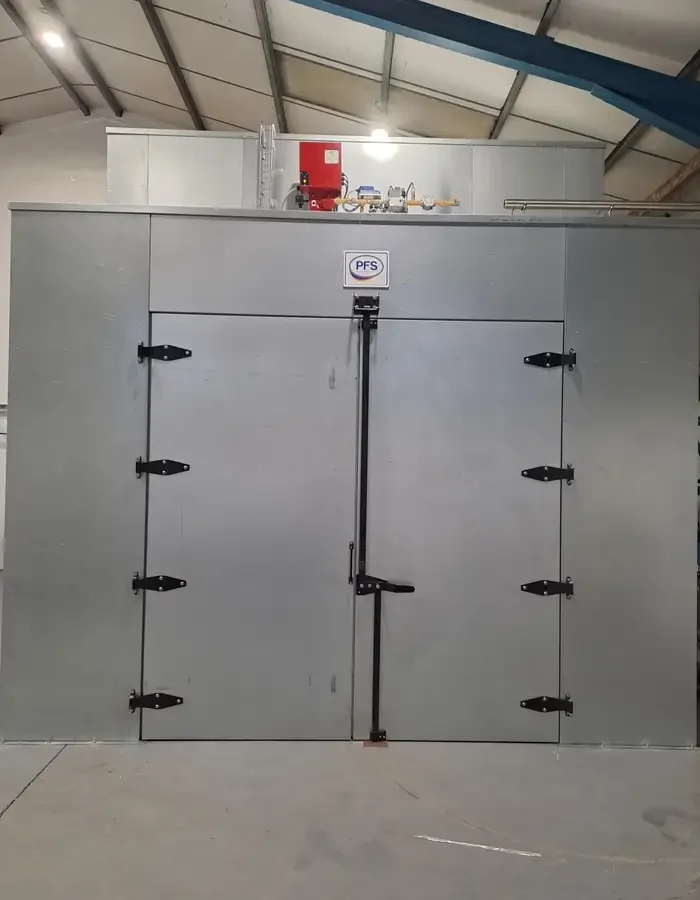
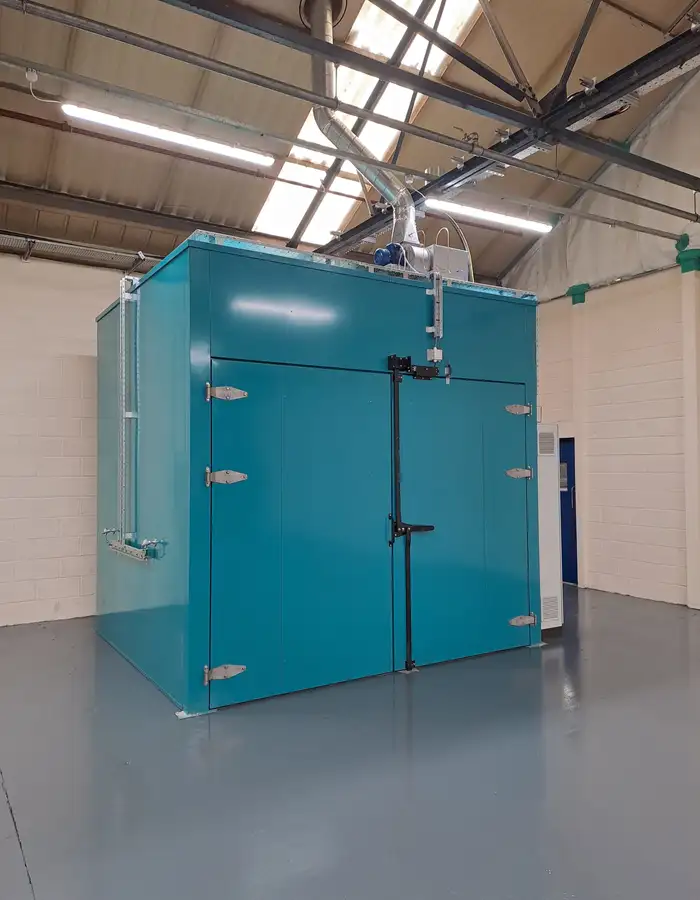
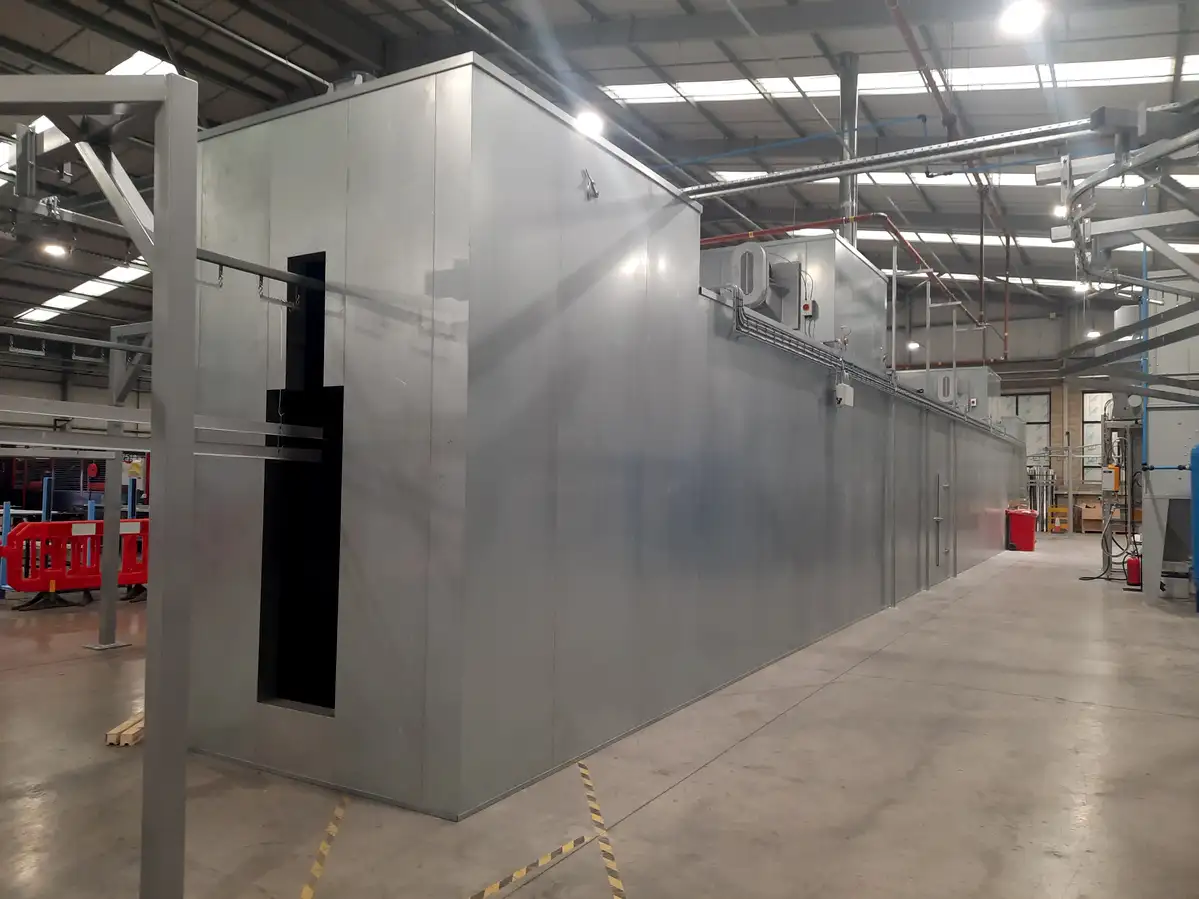
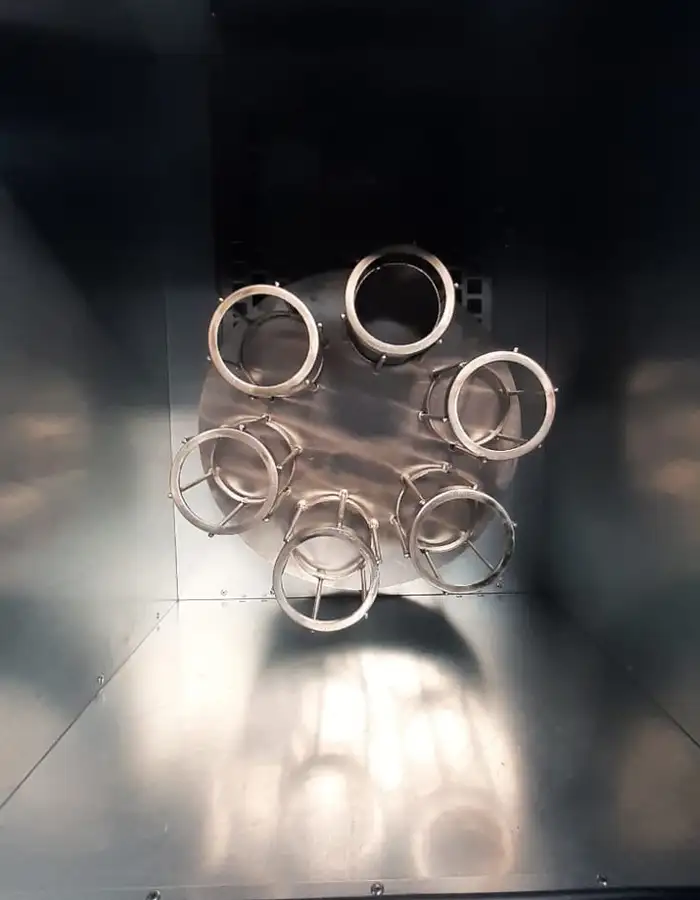
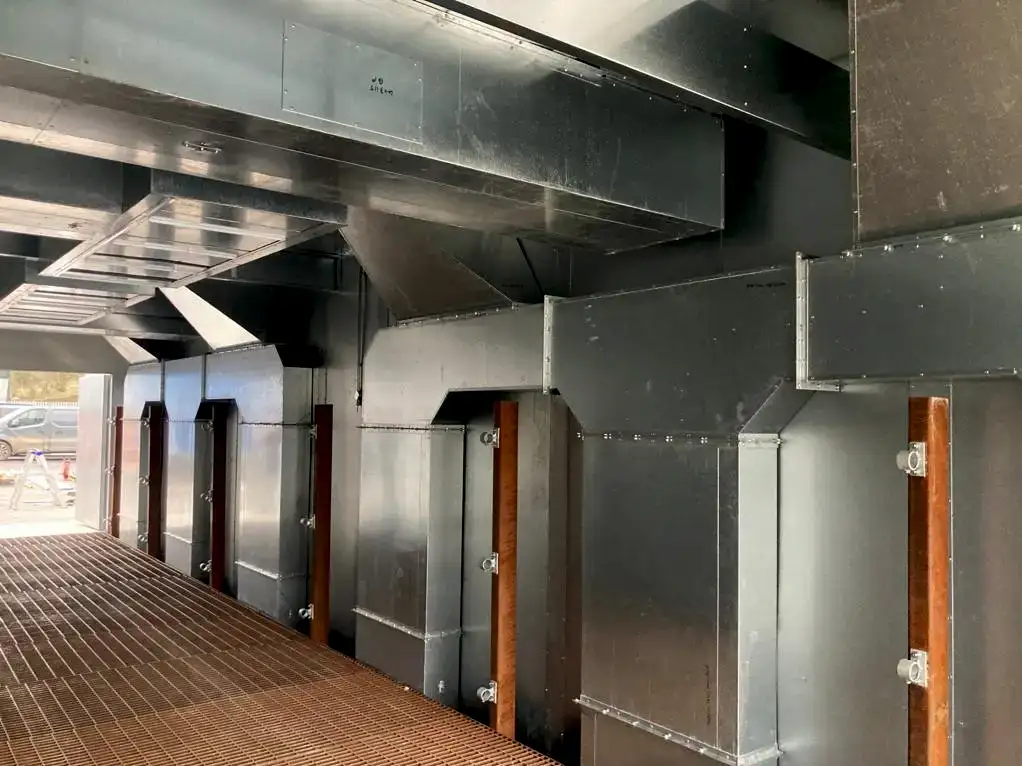
Why “Industrial Oven” Covers More Ground Than It Sounds
Curing paint, drying components after pre-treatment, heat-treating metal, and curing powder coat are all jobs for an industrial oven, but they’re not the same job, and a design built for one will underperform at another. Getting the right oven means starting from the process, not the product name.
Unitech Machinery has manufactured industrial ovens in the UK for over 50 years, and our industrial oven range covers the full spread of finishing and processing applications below.
Curing & Paint Drying Ovens
The most common application: curing wet paint or drying a coating after application, using controlled, even heat across the full chamber. Consistent temperature uniformity matters most here: hot or cold spots show up directly in finish quality. See our industrial curing ovens for batch and conveyor configurations.
Heat Treatment Ovens
A different job entirely: annealing, stress relieving, or hardening metal components at higher temperatures and often for longer, controlled cycles than a paint cure. Heat treatment applications typically demand tighter temperature control and PLC-driven ramp/soak programming to meet material specifications. Our heat treatment ovens are built specifically around this.
Powder Cure Ovens
Powder coating needs its own oven design: the powder has to flow and fuse into a continuous film before it fully cures, which means a specific heat-up profile rather than a simple wet-paint bake. Our powder cure ovens are engineered around that curing behaviour, for both batch and inline production. It is also important to design the airflow in curing powder coated parts to ensure the powder is not blown off the part before curing has started.
Box & Curing Ovens
Where a full conveyorised line isn’t justified, a box or curing oven handles batch processing of paints, powders and composites in a single enclosed chamber, a common fit for lower-volume or mixed-product operations that still need reliable, even heat.
Dry-Off Ovens
After pre-treatment washing, components need to be completely dry before the next process stage; any residual moisture shows up as coating defects further down the line. Dry-off ovens are designed for rapid, uniform moisture removal rather than high-temperature curing, keeping production moving without bottlenecking the wash stage.
How to Choose the Right Industrial Oven
A few questions determine the right specification more than anything else:
- What’s the process, not just the product? Curing, heat treatment, powder cure and drying all have different thermal profiles. Start from the process step, not the general category.
- Batch or continuous? Lower or mixed volumes usually suit a batch/box oven; steady high-throughput lines justify a conveyorised system.
- What temperature range and uniformity does the material or coating spec demand? Heat treatment tolerances are typically tighter than a standard paint cure.
- What energy source fits your site? Gas, electric and infrared heating each have different running-cost and installation implications, so specify against your actual site services rather than by default.
- Does it need to integrate with an existing line? Retrofitting an oven into an established conveyor or pre-treatment system is a different design exercise to a standalone new installation.
| Oven Type | Primary Use | Best Suited To |
|---|
| Curing / Paint Drying Oven | Curing wet paint coatings | General finishing lines, batch or conveyor |
| Heat Treatment Oven | Annealing, hardening, stress relieving metal | Metal processing with tight thermal tolerances |
| Powder Cure Oven | Fusing and curing powder coat | Powder coating lines, batch or inline |
| Box / Curing Oven | Batch curing of paints, powders & composites | Lower-volume or mixed-product operations |
| Dry-Off Oven | Removing moisture after pre-treatment | Pre-treatment wash lines |
Energy Efficiency Is Worth Building In From the Start
Whichever oven type you need, running costs are driven as much by control strategy as by burner size: modulating burners, insulated panels and standby-capable controls all reduce energy use without affecting cure quality. It’s worth reviewing Carbon Trust guidance on industrial process heat alongside your oven spec, particularly if you’re weighing a retrofit against a full replacement.
Frequently Asked Questions
Can one oven handle both curing and heat treatment?
Sometimes, if temperature ranges overlap, but the two processes have different uniformity and control requirements. It’s usually more reliable, and often more efficient, to specify an oven around the primary process.
How do I know if I need batch or conveyor?
It comes down to volume and consistency of throughput. Batch ovens suit variable or lower-volume production; conveyor systems suit steady, high-volume lines where a fixed cycle time makes sense.
Can existing ovens be upgraded rather than replaced?
Often, yes: control panel upgrades, burner replacements and improved insulation can meaningfully cut running costs on a structurally sound oven without a full rebuild.
Summary
“Industrial oven” isn’t one product. It’s a category covering distinct thermal processes, each with its own design requirements. Getting the type, control strategy and energy source right from the outset avoids costly retrofits later. Browse the full Unitech Machinery oven range, or get in touch to talk through which type fits your process.