How a Water Wash Spray Booth Works
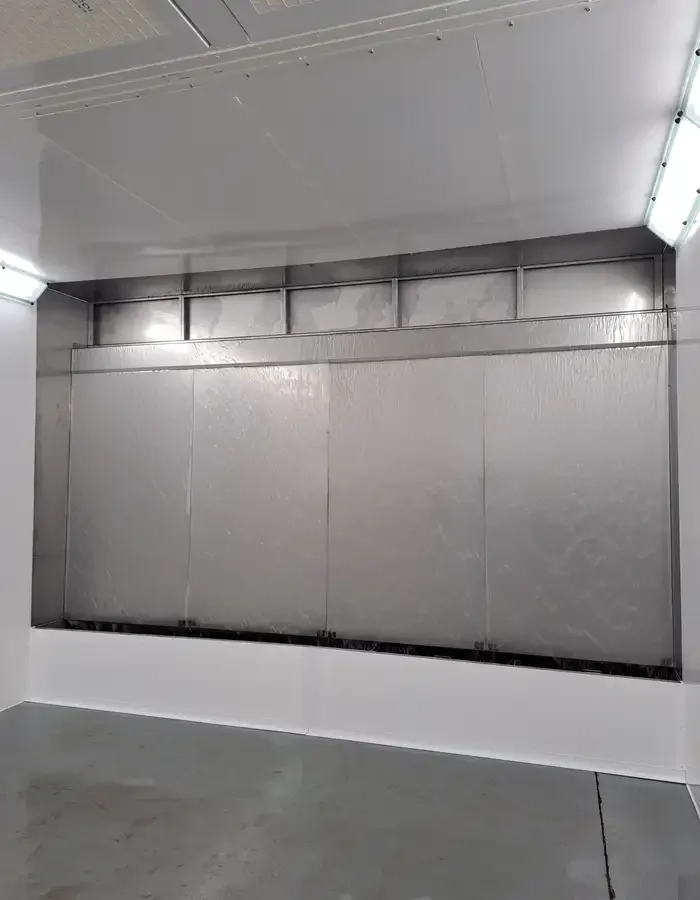
A water wash booth pulls overspray-laden air through a continuous water curtain or scrubber before it reaches the extraction fans. As air passes through the water, paint particles are trapped and washed out, settling as sludge that collects in a tank beneath the booth.
Because filtration happens through water rather than a physical media pad, capture performance stays consistent no matter how much overspray the booth is handling on a given day. There’s no filter to clog and no airflow drop-off as the shift goes on.
How a Dry Filter Spray Booth Works
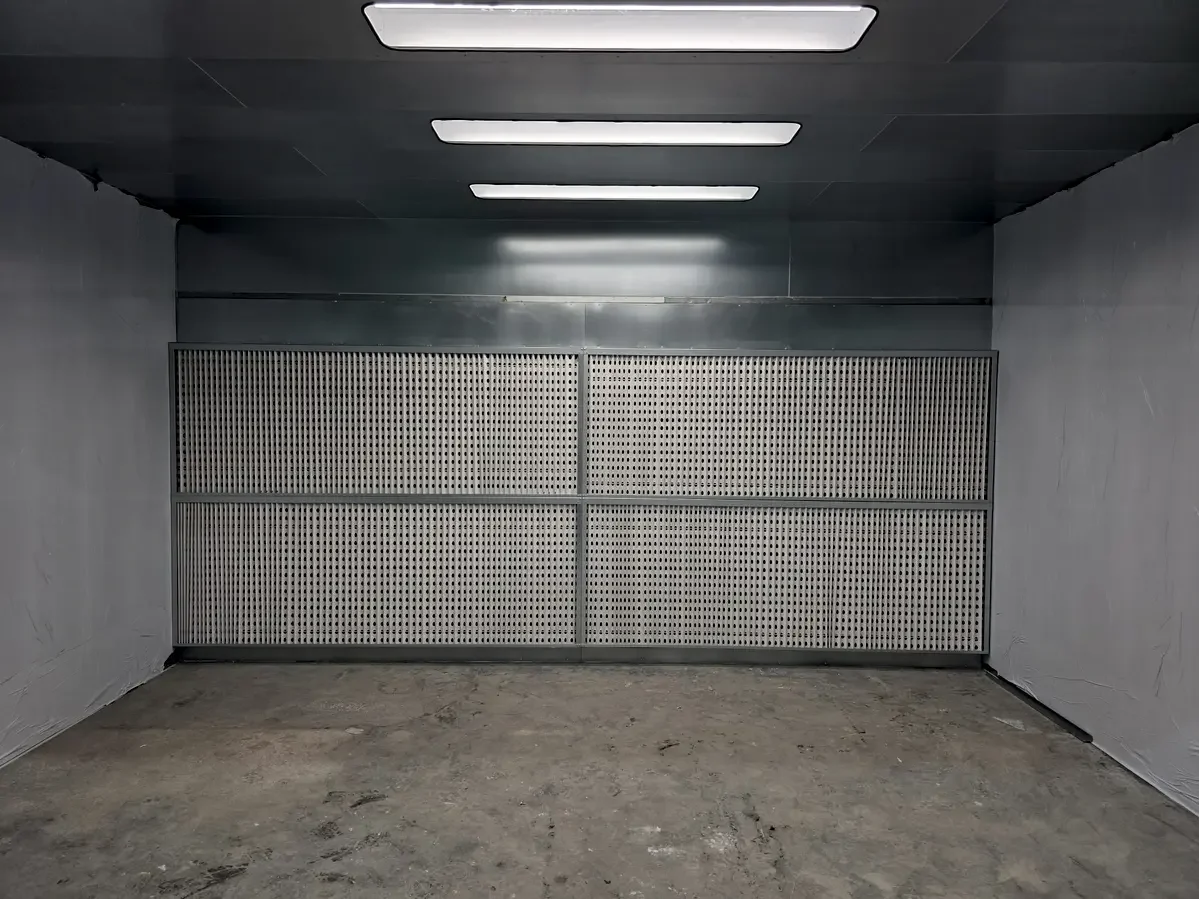
A dry filter booth uses replaceable filter media, typically cardboard baffle or recycled synthetic fibre pads, positioned in the airflow path to physically trap overspray as it passes through. It’s a simpler mechanical principle, with a simpler installation to match: no water tank, no sludge handling, no wastewater to manage.
The trade-off is that filter media loads up over time. As paint builds on the filter, airflow resistance increases, extraction efficiency drops, and the filters eventually need replacing to keep the booth performing correctly.
Comparing Running Costs
Neither system is cheaper across the board; the running cost driver is just different:
- Water wash: ongoing costs sit in water treatment chemicals, periodic sludge removal, and wastewater disposal in line with local discharge requirements. Once set up, day-to-day consumable spend is low even at high overspray volumes.
- Dry filter: the main ongoing cost is filter media itself, replaced on a schedule set by your spray volume. High-throughput operations get through filters faster, which can make water wash the more economical choice once volume climbs high enough.
Maintenance & Operational Considerations
Dry filter systems are generally the more straightforward to operate day to day: check and swap filters on schedule or by reviewing the fitted pressure differential magnehelic, and there’s little else to manage. Water wash systems need a water treatment routine and periodic sludge removal, but in exchange they avoid the disposal volume of spent filter media and don’t suffer performance loss between services.
Floor space and building services are also worth factoring in early: a water wash system needs a sump and space for the water circuit, while a dry filter booth has a smaller footprint and no water connection to plan for.
Whichever system you run, extraction performance should be checked as part of your routine Local Exhaust Ventilation (LEV) testing, a legal requirement for spray booths under COSHH, and a good early warning sign if a dry filter is due for changing or a water wash circuit needs attention.
Which System Suits Which Application
As a general guide:
- Water wash tends to suit: high-volume or heavy-overspray applications, multi-shift operations where consistent, unattended filtration performance matters, and sites that can accommodate a water circuit and discharge consent.
- Dry filter tends to suit: lower-to-medium volume operations, sites with limited floor space or no practical wastewater route, and paint shops that want the simplest possible installation and day-to-day operation.
| Factor | Water Wash | Dry Filter |
|---|
| Filtration method | Water curtain / scrubber | Replaceable filter media |
| Performance as load increases | Stays consistent | Gradually reduces until filters are changed |
| Main running cost | Water treatment & sludge disposal | Filter media replacement |
| Footprint | Larger, needs a water circuit | Smaller, simpler install |
| Best suited to | High-volume, heavy-overspray operations | Lower-to-medium volume operations |
Making the Right Choice for Your Paint Shop
There’s no universally “better” system. The right choice comes down to your overspray volume, available floor space, and how your site is set up to handle water and waste. A high-throughput automotive line running multiple shifts will usually get more value from a water wash system’s consistent performance. A lower-volume industrial or fabrication shop, or one without an easy wastewater route, will often find a dry filter booth the simpler, more cost-effective fit.
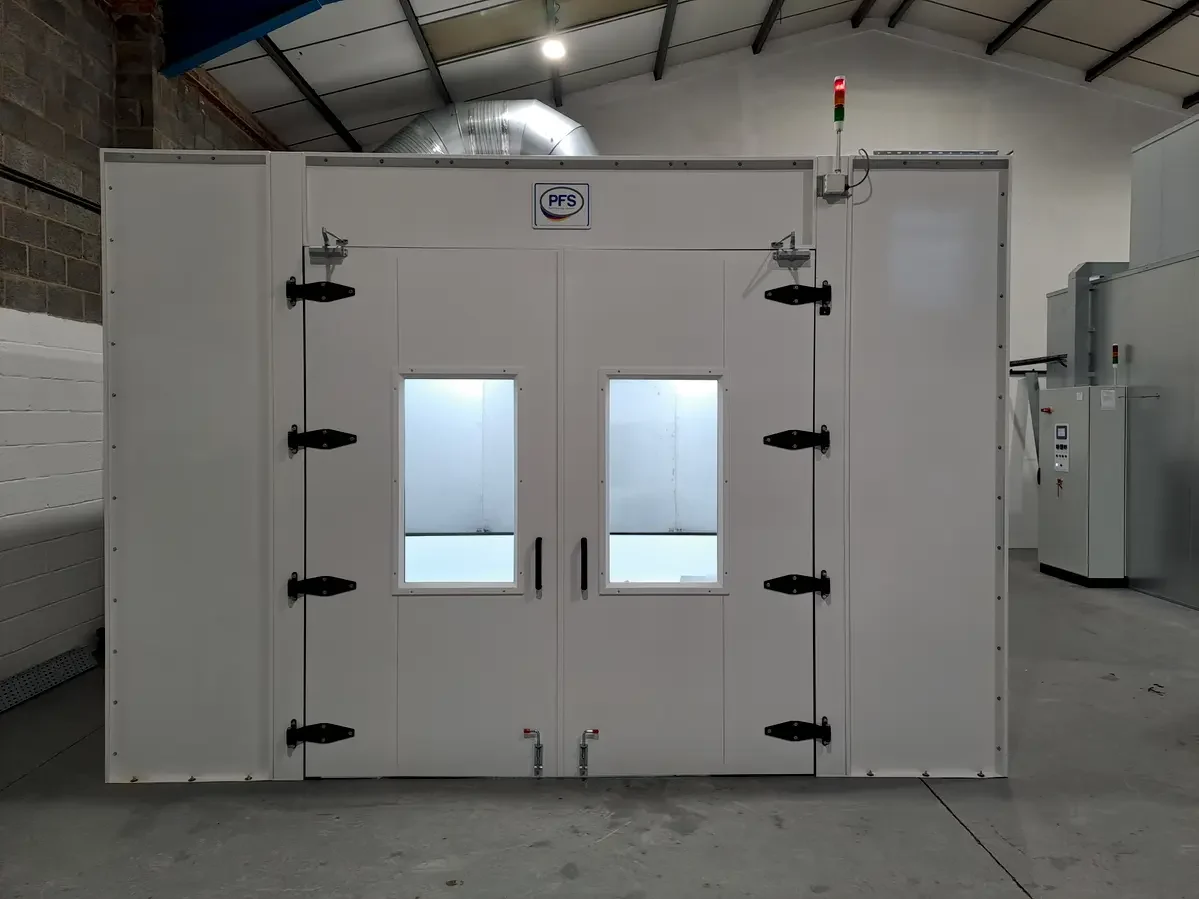
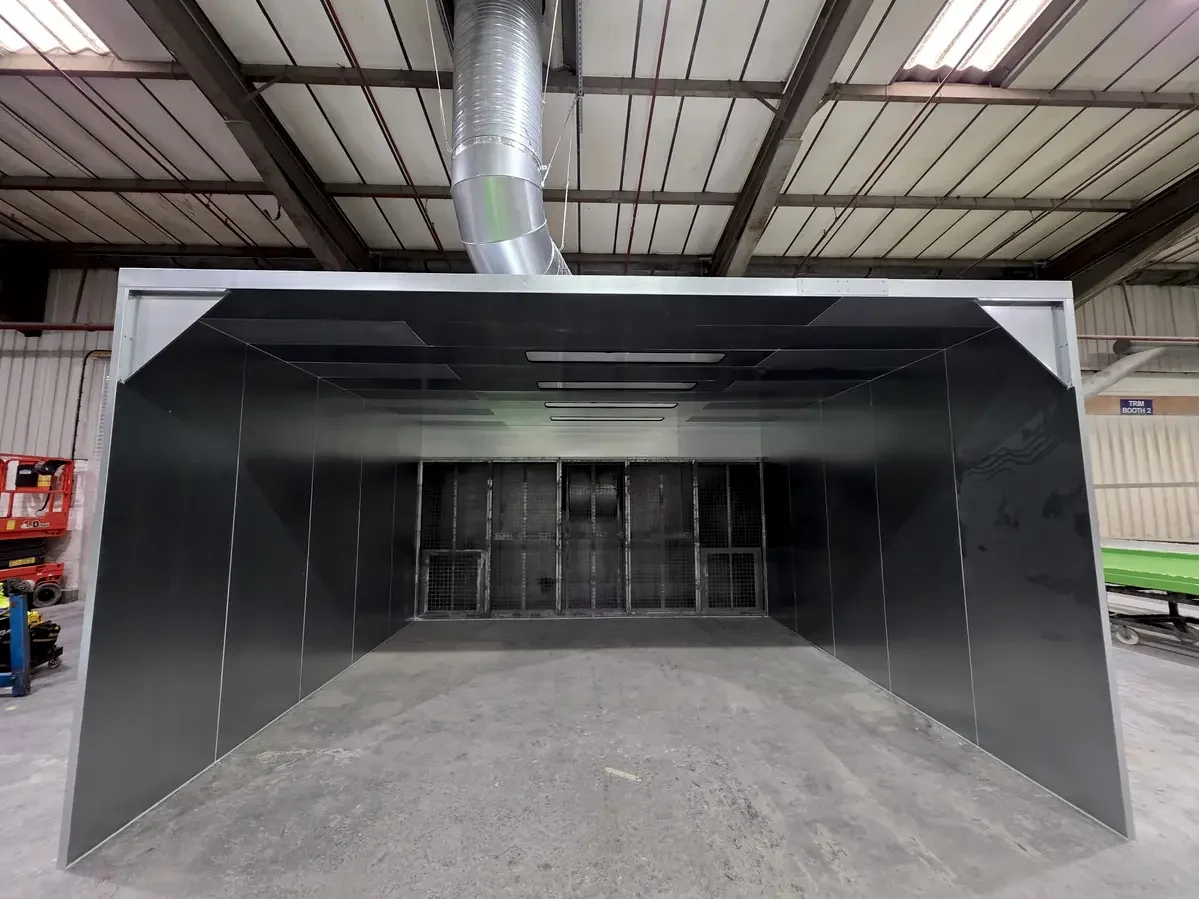
Unitech Machinery designs and manufactures both water wash and dry filter spray booth systems as part of our wider industrial spray booth range, built in the UK and specified around your actual production volume rather than a one-size-fits-all default.
Frequently Asked Questions
Can I convert a dry filter booth to water wash later?
In some cases, yes, but it typically involves significant structural changes to accommodate the water tank and circuit. It’s worth specifying the right system from the outset based on your expected volume.
Which system is better for VOC or environmental compliance?
Both systems are used across VOC-regulated industries; the choice affects overspray capture and running costs more than emissions compliance, which depends on your wider extraction and abatement setup.
Do water wash booths need more frequent servicing?
They need a different kind of servicing, regular water treatment checks and periodic sludge removal, rather than necessarily more frequent attention overall. Dry filter booths trade that for scheduled filter changes.
Summary
Water wash and dry filter systems solve the same problem in different ways, and the right one depends on your volume, footprint, and site services rather than one being straightforwardly better than the other. If you’re weighing up which fits your production line, get in touch with Unitech Machinery and we’ll help you specify the right system for your process.